
Chained Beasts Difficulty: Levels, Combat Tips, and What to Expect
Learn how Chained Beasts difficulty works, what is confirmed about its ten levels, and how to survive its brutal arena combat.
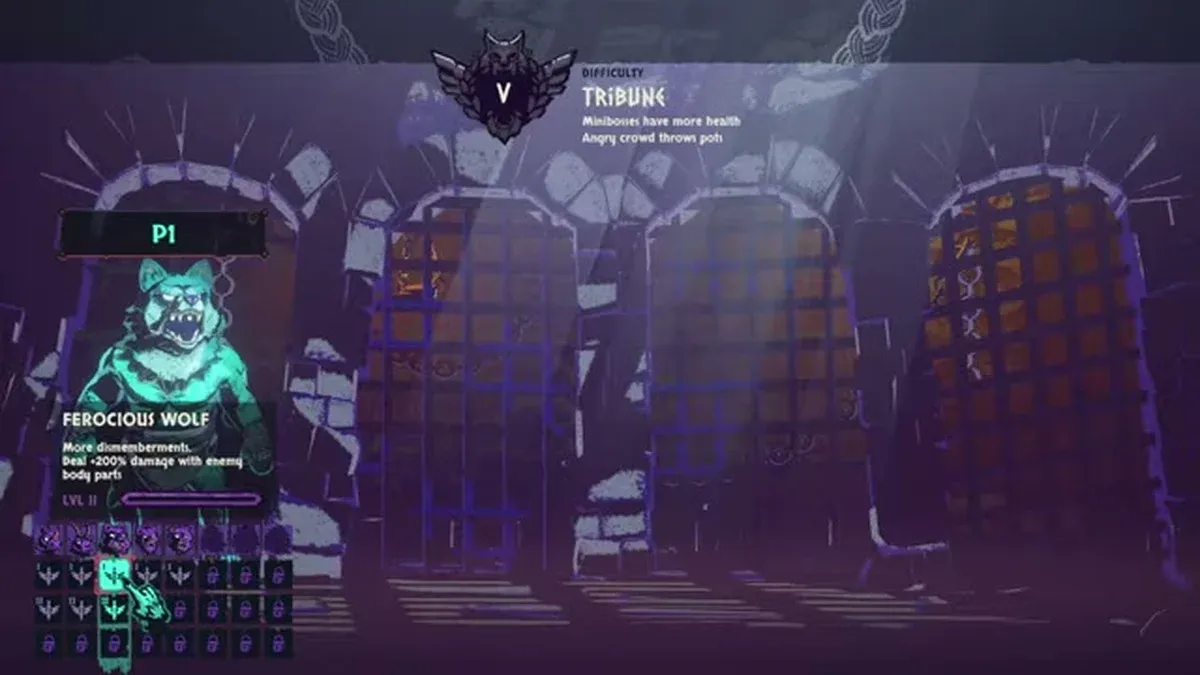

Desperate Ibex SPEEDS through difficulty 5! 🔗🐐 Chained Beasts OPEN BETA — Papa Boris
Chained Beasts is built around chaotic gladiator combat, so choosing the right difficulty can determine whether a run feels manageable or completely overwhelming. Understanding Chained Beasts difficulty matters because the game combines tough enemies, unpredictable injuries, limited resources, and arena hazards across a roguelike campaign. Here is what is currently confirmed, plus practical combat advice based on official information and player experience.
How many difficulty levels are in Chained Beasts?
The developer’s launch information lists 10 difficulty levels in the full release. However, the available source material does not provide the exact modifiers for every level, such as enemy health, damage, aggression, or reward changes.
That means players should avoid assuming that each level simply increases enemy statistics. Chained Beasts also includes more than 70 afflictions, more than 70 skills, over 40 items, and eight beasts with variants, so higher difficulty may be affected by the way a run combines combat pressure, injuries, upgrades, and equipment.
The full game contains:
- Nine battles across three acts
- Three arena chapters: Carthage, Germania, and Rome
- Ten difficulty levels
- More than 70 afflictions
- More than 70 skills
- More than 40 items
- Eight beasts plus variants
The developer has not supplied a complete public breakdown of what changes at each difficulty level in the referenced material. Treat specific claims about enemy scaling or unlock requirements as unconfirmed unless they come from an updated official guide or in-game documentation.
What difficulty 5 looks like in player experience
A community gameplay video from Papa Boris shows an Ibex run on difficulty 5 during the open beta. This is a player experience rather than an official difficulty guide, but it demonstrates how quickly a run can become dangerous even when the player is making progress.
Several challenges stand out in the run:
- Enemies can punish careless positioning near walls.
- Javelin users create pressure from a distance.
- Shielded enemies require careful timing and weapon selection.
- Club-enemy classifications can matter even when an enemy attacks without visibly holding a club.
- Poor throws can waste an opportunity or leave the player without a weapon.
- Afflictions can alter movement, vision, stamina, dodging, and combat behavior.
- Boss encounters can become much harder when additional enemies remain active.
The run also shows that success does not require a perfect build. The player survives by adapting to available weapons, using shields, exploiting walls, managing stamina, and taking advantage of arena interactions. You can watch the community example in Papa Boris’s difficulty 5 Chained Beasts gameplay.
Because this video comes from an open-beta playthrough, it should not be treated as proof that the final game uses identical balancing. It is best understood as a practical example of the kinds of combat problems players may face.
Tips for surviving higher difficulty
Prioritize positioning over damage
Chained Beasts lets you use the arena as a weapon. The official description specifically highlights throwing enemies into urns, charging them into spikes, and sending them toward snake pits. Walls can also create openings for attacks or special moves.
Before committing to an attack, consider:
- Where your chain partner or teammates are positioned
- Whether a wall, hazard, or pillar is behind the target
- Whether another enemy can interrupt your attack
- Whether you have enough stamina to escape afterward
A lower-damage attack that creates space may be safer than a stronger move that leaves you surrounded.
Keep a backup weapon available
The developer advises players to be careful when throwing weapons because they may have nothing left to use afterward. This becomes especially important at higher difficulty, where recovering a missed throw can expose you to ranged attacks or fast melee enemies.
Try to maintain access to:
- A reliable close-range weapon
- A shield when available
- A weapon suited to breaking defenses
- A throwable object only when the angle and follow-up are clear
The community difficulty 5 run illustrates how missed or awkward throws can become a recurring liability. Throwing is powerful, but it should not be your only plan.
Manage stamina before starting a combo
Dodges, special attacks, movement, and defensive actions all compete for your available stamina. Running out at the wrong moment can prevent an escape or leave you unable to capitalize on a stagger.
A safer rhythm is to:
- Draw an enemy into an attack.
- Evade or block without spending everything.
- Counter while the enemy is vulnerable.
- Recover stamina before chasing another target.
This is particularly important against enemies with strong reach or quick follow-up attacks.
Treat afflictions as strategic decisions
Afflictions are a central part of the game’s survival system. The official game description mentions injuries such as limping, vision loss, and hallucinated weapons, while the player video also shows effects involving movement input, vision, throwing, dodging, and stamina.
When choosing between an upgrade, treatment, or new affliction, consider how the effect interacts with your build. For example:
- A throwing penalty is more serious if your strategy depends on projectiles.
- A movement delay can make dodging and positioning less reliable.
- Vision problems are especially dangerous in crowded arenas.
- Reduced stamina recovery can weaken both offense and defense.
- An effect that prevents or changes defensive actions may make shield-based play harder.
There is no universally safe affliction choice. The best option depends on your current weapons, skills, health, and the next encounter.
Use chains and teamwork deliberately
The game supports solo play and co-op for up to four players, including online cross-play and couch co-op according to the developer’s launch information. Players can use chains to trip enemies, coordinate attacks, and manipulate positioning.
In co-op, establish simple roles rather than attacking randomly:
- One player draws attention from a dangerous enemy.
- Another attacks from the side or rear.
- A third uses the chain or arena hazards to disrupt targets.
- The group avoids wrapping around pillars or creating unnecessary tangles.
Coordination is more valuable at higher difficulty because uncontrolled movement can turn a manageable encounter into a pileup.
What is confirmed about release and platforms?
The full release launched on October 15, 2026. The developer announced versions for Steam, PlayStation 5, Nintendo Switch, and Xbox/Windows PC Game Pass through its official Chained Beasts release announcement.
Platform listings provide the following details:
| Platform | Confirmed information |
|---|---|
| Steam | Released October 15, 2026 for Windows and macOS; supports single-player and co-op features |
| PlayStation 5 | Official PlayStation listing identifies a PS5 version released October 15, 2026 |
| Nintendo Switch | Nintendo lists a digital Switch version; its regional page shows October 16, 2026 |
| Xbox Series X|S and PC | Xbox lists the game with local co-op, online co-op, shared/split screen, and Xbox Play Anywhere |
| Game Pass | Xbox announced availability through Game Pass Ultimate and PC Game Pass |
The Steam listing also showed a downloadable demo on October 16, 2026. Demo availability can change, so check the official Chained Beasts Steam page before relying on that option.
Is Chained Beasts difficulty confirmed to change enemy damage?
The supplied official information confirms that the game has 10 difficulty levels, but it does not explain every level’s exact modifiers. A community playthrough reaches difficulty 5 and describes the combat as highly punishing, but that is not enough to establish a complete scaling formula.
Therefore, claims such as “difficulty 10 doubles enemy damage” or “difficulty 5 unlocks a specific boss” remain unconfirmed based on the available sources. Until the developer publishes a detailed breakdown, the safest approach is to treat each difficulty as a progressively harder version of the same roguelike structure and adjust your build around survival, crowd control, stamina, and arena positioning.
Chained Beasts difficulty FAQ
How many difficulty levels does Chained Beasts have?
The developer’s launch information lists 10 difficulty levels in the full release.
Is difficulty 5 considered hard?
A player gameplay example shows difficulty 5 producing demanding encounters involving ranged enemies, shields, bosses, stamina management, and afflictions. This is community experience, not an official difficulty ranking, but it suggests that difficulty 5 can be challenging even for players familiar with the combat system.
Does higher difficulty add new afflictions?
Afflictions are a core part of Chained Beasts, but the supplied sources do not confirm which afflictions are tied to particular difficulty levels. Any level-specific affliction list should be treated as unconfirmed unless supported by an official update.
Can I play Chained Beasts difficulty modes with friends?
Yes. Official listings support solo play and co-op, including online and local options depending on the platform. The developer also states that up to four players can play online with cross-play or together through couch co-op.
Continue exploring
Related Articles
combat
Chained Beasts Afflictions: Wounds, Potions, and Survival Tips
Learn how Chained Beasts afflictions affect arena survival, including wounds, potions, mental injuries, and practical run-planning tips.
combat
Chained Beasts Bosses: What We Know and How to Prepare
Learn what is confirmed about Chained Beasts bosses, arena chapters, combat systems, and preparation strategies for solo and co-op runs.
combat
Chained Beasts Weapons: How to Fight Smarter in the Arena
Learn how weapons, chains, arena hazards, and teamwork shape combat in Chained Beasts, based on official game information.
Was this helpful?
Thanks for the feedback!